News article
Dubai South and Expo City: investing near the world's future largest airport
Within a 10-year horizon, Al Maktoum International Airport is set to become the world's largest airport with a capacity of 260 million passengers per year. Around it Dubai South is emerging — a masterplan the size of Prague, with Expo City as its new downtown. An analysis of the infrastructure catalyst, the price gap versus old Dubai and the right time to enter the area.
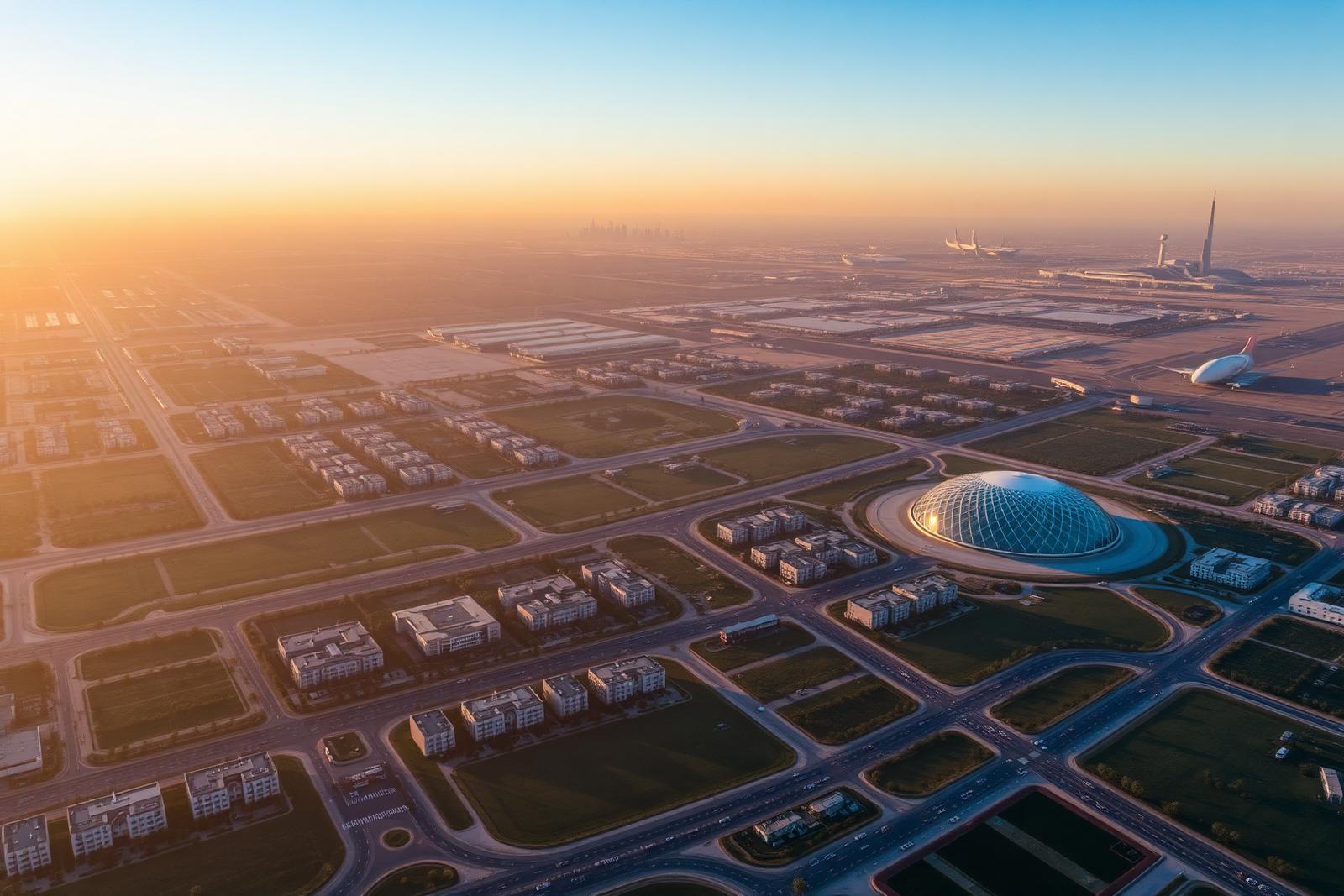
While investors compete for units in Downtown, the Marina or Palm Jumeirah, the biggest structural shift in the entire emirate is taking place on Dubai's southern edge. Dubai South and Expo City represent a 145 km² masterplan centred on the expanded Al Maktoum International Airport (DWC) — which will become the world's largest airport once complete. This is where developer terminology calls "the next Downtown" is being built.
Al Maktoum International Airport: 260 million passengers per year
In 2024 the Dubai government approved a DWC expansion worth more than USD 34 billion. The target: capacity of 260 million passengers per year (for reference, Dubai International DXB currently handles around 90 million and Prague Ruzyně around 18 million). The full transfer of Emirates and flydubai operations from DXB to DWC is planned within a 10-year horizon. Historically an airport of this scale has been among the strongest long-term catalysts for property values within a 15–25 km radius (Heathrow, Frankfurt, Changi, Incheon).
Dubai South: a masterplan the size of Prague
Dubai South is a master-planned zone covering 145 km² (Prague has around 496 km², the urban area around 145 km²) divided into several functional districts: Residential District, Business Park, Logistics District (a freezone hosting Emirates SkyCargo), Aviation District (MRO and aviation manufacturing), Golf District and a Humanitarian District (a global UN humanitarian hub). The planned population at target state is around one million.
Expo City Dubai: the new downtown
The EXPO 2020 site has not disappeared — it has been transformed into Expo City, a permanent mixed-use downtown with 500,000 m² of offices, 6,000 residential units, museums, a conference centre and direct metro connection (Route 2020). Siemens Energy, DP World, Terminus and a range of multinationals have already signed as tenants. Expo City is positioning itself as an HQ zone for sustainable business and is the functional core of Dubai South.
The price gap versus established Dubai
Average prices of new residential units in Dubai South / Expo City are currently around 40–60% below equivalent projects in Business Bay or Downtown. Entry studios start at USD 180,000, one-bed apartments from around USD 250,000. As key infrastructure milestones are delivered (DWC expansion, metro extension), price convergence is one of the core investment theses for this location.
Transport and connectivity
Dubai South sits on the E611 (Emirates Road) motorway and on the planned metro line linking DWC with central Dubai and Abu Dhabi. The drive to Downtown Dubai is around 30 minutes; to Abu Dhabi around 45 minutes. The plan also includes connection to the GCC high-speed rail (UAE — Oman — Saudi Arabia), which will materially shorten travel between the Gulf capitals.
Who is already there
Emirates SkyCargo (Emirates' global cargo hub), DP World, Dubai Wholesale City, Boeing (MRO facility), Etisalat Academy — and other multinationals building their regional HQs in Dubai South. This creates stable long-term rental demand from management and technical staff.
When to enter
The "infrastructure catalyst" investment window is typically strongest 2–5 years before the official opening of the key infrastructure. In the case of DWC that means now — the investor enters at prices reflecting "Dubai's periphery" and, on a 5–10 year horizon, benefits from a re-rating aligned with "a central location around the world's largest airport". The risk: infrastructure projects slip, and the investment horizon should be planned with a buffer.
Who Dubai South makes sense for
• Investors with a 5+ year horizon seeking primarily capital growth underpinned by a structural catalyst.
• Clients looking to enter Dubai with lower capital intensity than Downtown / Palm.
• Investors building a multi-unit portfolio — the option of acquiring 2–3 units for the price of one Downtown unit.
A specific project in our portfolio
Fitting the strategy "entering Dubai with room for capital growth backed by infrastructure development" is Bond Enclave in Arjan (Dubai) — a well-connected district on Dubai's western side with excellent access to both central Dubai and the expanding DWC airport. Current availability, payment schedule and floor plans are on the project detail page.
Summary
Dubai South and Expo City currently offer one of the strongest structural investment theses in Dubai — completing Al Maktoum International Airport as the world's largest airport is one of the strongest property catalysts identifiable in the market. The combination of a low entry price, active build-out and a clearly defined timeline creates an investment window that will not reopen in the same form.
Risk notice
The airport capacity cited (260 million passengers) and the 10-year timeline reflect the officially published intentions of the Dubai government and may change over time. Masterplan build-out (including Dubai South) depends on phasing and is subject to delay risk. Price levels reflect current market conditions and do not represent a guaranteed or average yield for any specific unit. Past performance of airport catalysts (Heathrow, Frankfurt, Changi, Incheon) does not guarantee identical results in Dubai. This news item is provided for information only and does not constitute a public offer or an investment recommendation.
Related project